Downtown Frankfort's Historic District Permit Almost Always Says Yes. That Doesn't Make It Quick.
October 1, 2026
October 1, 2026
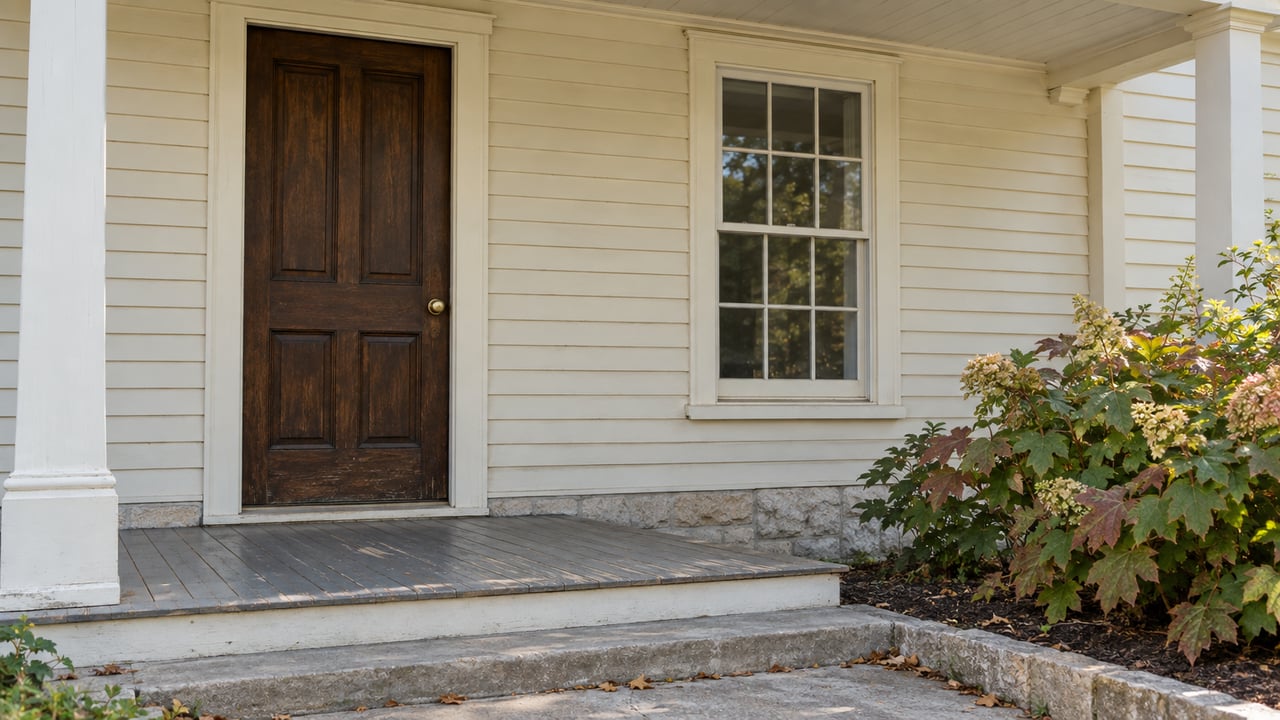
Buy an older home inside Frankfort's historic core and the first renovation question isn't whether the village will let you replace the siding or swap the windows. It's how long that permission takes to arrive, and whether your closing timeline or your listing photos were built around an assumption that never should have been made.
The Village of Frankfort's Historic Preservation Commission reviewed nine Certificates of Appropriateness during fiscal year 2021-22. Eight were approved. One was denied. A separate application that same period got tabled across multiple meetings before it was ultimately denied, resubmitted, and approved on a second pass. Read that as a rejection rate and the historic district looks tame: roughly one in ten. Read it as a calendar problem and it looks different. The one application that survived to approval did so only after more than one meeting cycle, which means the real cost of owning inside this district was never the vote. It was the wait for the vote.
Frankfort's H-1 Historic District covers roughly 65 structures, not all of them historic, sitting inside the boundaries of the original 1855 town plat: the old railroad line (now the Old Plank Trail) to the north, Utah Street to the south, Ash Street to the east, and Walnut Street to the west. Anything inside that footprint, plus two locally designated landmarks outside it, falls under a rule that most buyers never think to ask about until they're already under contract.
A Certificate of Appropriateness has to be issued by the Historic Preservation Commission before the village will issue a building, demolition, or relocation permit for a structure in the district. The trigger isn't every project. The village's own ordinance limits it to changes that would produce what it calls a major change in the exterior appearance of a building, which covers additions, alterations, reconstruction, and new construction or demolition requiring a permit in the first place. Paint a room, replace a furnace, redo a bathroom and you're not touching this process. Replace the roof, add a porch, put up new signage, or take down a wall that changes how the building reads from the street and you are.
The village currently recognizes two locally designated landmarks: St. Peter's United Church of Christ and the house at 204 Hickory Street, built around 1889 and designated a local landmark in November 2022. Landmark status doesn't require H-1 zoning, and it comes with its own version of the same review, plus tax benefits tied to rehabilitation work that the village notes on its preservation pages without spelling out a specific dollar figure. If a Frankfort listing you're considering carries a landmark plaque, budget the same review process into your plans regardless of where the house sits on the map.
An 89 percent approval rate sounds like the commission rarely says no, and by the numbers, it doesn't. What the same FY2021-22 report also shows is that no Certificates of Economic Hardship were requested or reviewed that year, meaning nobody argued they couldn't afford to comply with the design guidelines. Every application that year worked within the rules rather than around them. That's a sign the guidelines are specific enough that most applicants know what they can and can't do before they file, which cuts against the assumption that this is a subjective process where outcomes depend on who shows up to the meeting.
What it doesn't cut against is timeline risk. A homeowner whose application got tabled and resubmitted before winning approval spent multiple meeting cycles getting there. Commission minutes from mid-2022 show meetings roughly a month apart, in June and again in July, which lines up with a routine monthly cadence rather than an on-demand review. If your renovation plan assumes permits clear in the same window a non-historic Frankfort project would, and your house sits inside the H-1 boundary, that assumption is the thing likely to break your schedule, not the commission's judgment.
Frankfort hasn't treated its historic core as a settled matter. The village commissioned a full intensive historic resources survey to update an earlier 1996 reconnaissance survey of downtown buildings, funded through a Certified Local Government grant from the Illinois Department of Natural Resources' Historic Preservation Division. That kind of groundwork typically precedes new landmark nominations or district boundary conversations, not the kind of project a village runs when it's letting a program go quiet.
The Frankfort Preservation Foundation has also pushed a public fundraising campaign to save the downtown water tower, one of the more visible pieces of the historic skyline. In August 2024, the foundation presented the village with a check timed to a state grant of $250,000 secured through Senator Hastings' office specifically for preserving the tower. A community group raising money and a state legislator securing a quarter-million-dollar grant for a single structure is not background noise. It signals that Frankfort's historic assets have organized, funded advocates paying attention to how they're treated, which raises rather than lowers the odds that COA reviews stay careful going forward.
None of this is unique to the H-1 district in isolation. Frankfort's building department requires permits for a long list of projects villagewide, from fences and sheds to driveway repairs and gas lines, and new home construction has to clear at least 23 separate inspections before final approval. Careful review is a feature of how Frankfort handles construction generally. The historic district simply adds one more layer on top of a process that was already thorough to begin with.
If you're buying a house inside the H-1 boundary, or one carrying a landmark designation, a few things are worth confirming before your inspection contingency expires:
Sellers face the mirror version of this. If you've made exterior changes to a home inside the district without a COA on file, that's worth resolving before you list, since a buyer's attorney or lender reviewing permit history is likely to ask. If your home carries the local landmark designation, disclosing the rehab tax benefit alongside the review requirement gives a buyer the full picture rather than just the friction.
Does every house in downtown Frankfort need a Certificate of Appropriateness for renovation work? No. Only structures inside the H-1 Historic District boundary or those carrying local landmark status. Interior work and routine repairs that don't change a building's exterior appearance don't trigger the review.
How long does a Certificate of Appropriateness typically take? The commission's own FY2021-22 report doesn't publish an average timeline, but meeting records from that period show a roughly monthly schedule, and at least one application needed more than one meeting cycle before final approval. Plan around monthly review windows rather than a single meeting.
Is demolition treated differently than renovation? No. The same Certificate of Appropriateness requirement applies before the village will issue either a building or a demolition permit for property in the district.
Does landmark status apply outside the H-1 district? Yes. A property doesn't need to sit inside H-1 zoning to be nominated as a local landmark, only to be located within the village's corporate limits. St. Peter's United Church of Christ and 204 Hickory Street are Frankfort's two current examples.
Downtown Frankfort's oldest homes carry a kind of paperwork most suburban listings never touch, and it rewards buyers and sellers who plan for the calendar rather than the outcome. If you're weighing a character home near Old Town or getting ready to list one after renovation work, Carla Gorman can walk through what the H-1 review means for your specific timeline before you write the offer or set the listing date.
Stay up to date on the latest real estate trends.
My experience and dedication allows my clients to achieve their goals in the shortest amount of time with the highest investment. Whether you are a first-time home buyer or a seasoned seller, I will bring energy, experience, and integrity to your next real estate venture. Contact me today to begin your real estate experience!